
Whisky and chess. ..beautiful
combination. ..
Ecosystem Strategy Design
Whisky and chess. ..beautiful
combination. ..
“I’ve Got You Under My Skin” door Sonny Rollins op @Sonos #NowPlaying

Life was good in Paris. Lunch at Julien…Art by Anselm Kiefer at Pompidou centre…champagne in Georges’ Starck interior.

Interieur by #PhilippeStarck
#Spectre met Niek, #PubliekeWerken met Nanette, #Dummie2 met Meine en nu in #DeTempelier met Rachid.

Kan slechter denk ik dan…

Union H1-HGC zaal hockey…
Met deze coole gast

Driemaal raden wat we gaan zien…#spectre
Een recent artikel van McKinsey Insights met aannames en mythes over Amerikaans zorg consumentisme geeft interessante inzichten voor de komende jaren en wellicht ook voor Nederlandse ontwikkelingen in deze bewegende zorgmarkt.
Uiteraard is dit onderzoek gebaseerd op Amerikaanse consumenten maar dit neemt niet weg dat er wellicht ook lokale lessen uit te trekken zijn. Hieronder vindt u een door mij daar waar mogelijk integraal vertaalde weergave van het originele artikel zoals boven in de link vermeld.
Inleiding
Tot voor kort bewoog de zorgconsument in de VS zich in beperkte mate maar door een aantal convergerende ontwikkelingen ziet McKinsey nu toch een meer dynamische markt ontstaan.
Een hoger eigen risico, een grotere transparantie in de provider prestaties en kosten, en de opkomst van provider geleide zorgplannen dwingen patiënten meer betrokken te worden in de gezondheidszorg besluitvorming dan ooit tevoren.
Tot nu hadden verschillende belanghebbende weinig data om vast te stellen hoe consumentisme in de zorg hen zou raken. Gevolg hiervan was dat zij aannames over zorg consumenten vaak als feit gepresenteerd, niet konden bevestigen of weerleggen.
McKinsey heeft meer dan 11,000 mensen gedurende de laatste 8 jaar geïnterviewd over hoe men zorg behoeften wensen en behoeften beleefden, hoe men instellingen selecteerden en hoe men andere zorgbeslissingen nam. De resultaten suggereren dat veel aannames die gedaan worden over zorg consumentisme niet op meer dan mythe berusten.
Mythe #1
Gezondheidszorg verschilt van andere industrieën. Consumenten hebben niet dezelfde verwachtingen over klant ervaring bij (gezondheids)zorg die ze wel hebben bij winkelbedrijven of technologie bedrijven.
Consumenten werd gevraagd naar de beste consument gerichte non-zorg bedrijven en daaruit kwamen Apple en Amazon naar voren. Vervolgens werd gevraagd naar wat deze bedrijven zo consument gefocused maakte en welke eigenschappen daarbij hoorden.
Goede klantenservice werd gelijk gewaardeerd tussen non-zorg en zorg bedrijven. Andere eigenschappen die men verwacht in gelijke mate zijn: verwachtingen waarmaken, het leven makkelijker maken en het leveren van excellente waarde.
Mythe #2
Consumenten weten wat zij willen van zorgbedrijven en wat hun beslissingen motiveert.
Meeste consumenten hebben een sterke mening over hetgeen belangrijk is wanneer zij zorg beslissingen nemen of zorg ontvangen. Maar er is een verschil tussen wat consumenten geloven dat het belangrijkste is en hetgeen dat hun beslissing het meest beïnvloed. Gezien het ongrijpbare van zorg verzekering en zorg levering lijkt het erop dat sommige factoren een veel grotere invloed hebben dan consumenten realiseren.
De factor die de tevredenheid over de zorgervaring meer beïnvloed dan de uiteindelijke zorg uitkomst is de empathie en ondersteuning van het zorgpersoneel. De informatie die deelnemers ontvingen tijdens en na behandeling had ook een sterke invloed op tevredenheidsniveaus.
Mythe #3
Meeste consumenten onderzoeken hun zorg keuzemogelijkheid voordat ze belangrijke beslissingen nemen en maken dan feit-gebaseerde keuzes op basis van hun onderzoek.
Vijf verschillende onderzoeken suggereren dan de meeste, zo niet alle, zorgconsumenten nog geen onderzoeksgebaseerde beslissingen nemen. Uitkomsten bij McKinsey geven aan dat bijvoorbeeld maar een klein aantal consumenten zorgleverancier kosten onderzoeken dan wel het aantal leveranciers waaruit men kan kiezen nader onderzoekt.
Mythe #4
Nu consumenten meer betalen voor hun gezondheidszorg, is de premium prijsstelling de enige werkelijk belangrijke factor in de aankoopbeslissing.
Premium prijs blijft een belangrijk punt, maar is in veel gevallen niet het belangrijkste criterium. Een substantieel percentage van de mensen neemt niet de goedkoopste verzekering die ze kunnen krijgen.
Mensen namen hoger geprijsde zorgverzekeringen gebaseerd op voorkeur van van provider organisaties, omdat het inclusief farmacie voordeel toevoegingen bevatten of omdat het alternatieve vormen van zorg betrof.
Mythe #5
Bijna alle consumenten hebben een primary care provider (PCP) en zijn staan zeer onwelwillend tegenover veranderen van artsen.
In het overzicht geeft 82 % aan dat ze een PCP hebben, dit cijfer is echter heel erg leeftijdsgebonden. Ook speelt inkomen een grote rol. Verder is van belang of het wel of niet vergoed blijft binnen de zorgverzekering. Op het moment dat vergoeding veranderd zijn mensen ook meer bereid te veranderen van arts. Deze bereidwilligheid is in meer dan de helft van de gevallen aanwezig.
Daarnaast is 71 % van de respondenten het eens met het gegeven dat er meerdere goede artsen om te consulteren zijn naast hun PCP.
Mythe #6
Klinieken in winkels blijven een niche gezondheid oplossing.
Bewustzijn en gebruik van alternatieve zorg opties is stijgende. Meer dan 80% van de respondenten was op de hoogte van het feit dat klinieken in winkels en drogisterijen of apotheken aanwezig waren. Twee-derde daarvan geeft aan deze services te willen gebruiken.
De helft van de ondervraagden geeft ook aan niet zeker te weten welke diensten precies worden aangeboden. 51% gebruikte de faciliteiten voor inenting, 26% voor kleine behandelingen.
Mythe #7
Alleen jongen mensen gebruiken technologie om hun gezondheid en zorg behoeften te managen.
Uiteraard zijn de millennials (mensen tussen 18 jaar en 34 jaar) gewend om technologie te gebruiken. Maar ook een behoorlijk deel van ouderen doet dit ook.
In alle leeftijdsgroepen zijn twee activiteiten leidend; communiceren met je arts en afspraken kunnen maken. Millennials zijn daarnaast ook nog veel meer bereid om sociale media daarvoor in te zetten.
Mythe #8
Meeste mensen zijn bereid verzekeraars te vertrouwen in het opslaan van hun gezondheid dossiers.
Er werd aan de deelnemers gevraagd om zich voor te stellen een gezondheidsmonitor device in gedachte te nemen. Vervolgens werd gevraagd of men deze data ergens wilde opslaan en of men bereid was deze data met iemand te delen?
Qua opslag van deze data koos de overweldigende meerderheid voor hun PCP. Daarmee wil men het ook het liefste delen. Men wil het minste delen met verzekeraars, Google, Apple en het minst met werkgevers.
McKinsey is overtuigd dat zorg consumentisme binnenkort een steile stijging in zal gaan. Daarnaast is men ervan overtuigd dat betalers en instellingen daar in mee willen plannen nodig zijn om te kunnen acteren of helpen vorm te geven aan de ontwikkelingen.
Men moet nadenken over de waarde propositie die men gaat leveren aan de consument en daarnaast zal een veel groter vertrouwen opgebouwd moeten worden voordat de consumenten hun gezondheidsdata willen overdragen.
Patiënt loyaliteit is zeker geen gegeven en de ervaring gerelateerde factoren als empathie en gemak spelen een veel grotere rol dan nu gedacht.
Als laatste moeten zowel betalers als leveranciers nadenken over de evoluerende rol van nieuwe zorg technologieën in het vormen van consument gedrag zodat men daarvan voordeel heeft en geen slachtoffer wordt. Maar wellicht het meest belangrijke is het besef dat consumenten verwachtingen hebben in de gezondheidszorg die niet wezenlijk anders is dan de verwachtingen vanuit andere industrieën.
In feite zullen andere industrieën deze verwachtingen vorm blijven geven. Zorginstellingen zullen deze achterstand in moeten halen of het risico lopen dat men overrompeld wordt door disruptie.
The real problem is not whether machines think, but whether men do.
– B. F. Skinner
There has been a great deal of wringing of hands and gnashing of teeth about the lack of generalized improvements in health care delivery as we approach the beginning of the end of initial electronic health record (EHR) adoption. For some, self-flagellation might be appropriately added when realizing that the purchase and implementation of such platforms can cost up to $70,000 per care provider. By the end of this year, it is anticipated that the overall EHR market may reach the astounding figure of more than $6 billion dollars annually.
Unfortunately despite the cost, there is a “dirty little not so secret” among the majority recently implementing EHRs – that productivity (moving patients through a health care experience and documenting the encounter) has worsened rather than improved. Most would identify with a recent health system study demonstrating that while EHR implementation may have a positive financial impact, work productivity can suffer. Another national survey of more than 200 ambulatory and hospital-based physicians across the U.S. recently reported that when it comes to working efficiency, the overwhelming majority are underwhelmed. Two-thirds (66%) said that they were seeing fewer patients than before, and the vast majority (85%) reported spending more time documenting visits.
A small number of organizations, namely those that have been in the EHR game for much longer periods of time, have realized improvements in clinical work flow and productivity using these tools. But I will go out on a relatively strong limb and say that in the moment, these organizations are absolute exceptions to the rule.
Is this a cause for alarm? Were the billions of dollars transferred from the several (health systems everywhere) to the few (the handful of EHR vendors located in Madison, Wisconsin and a couple of other locations) ill-advised? As is often the case, there are some interesting lessons from history that can be brought to bear.
It is useful to begin with the concept of the “general purpose technology (GPT).” A GPT is a technology that can affect an entire economy, and alter economic and social structures. These technologies also usually have three more specific characteristics – pervasiveness, an ability to improve over time and lower the costs of its users, and encourage the invention and production of new products and processes. As a GPT can be a product, process or system, some notable examples would include: domestication of plants and animals, the wheel, mass production, electricity, nuclear energy and the computer.
One could imagine a long list of GPTs specific to medicine, including such things as general anesthesia and the X-ray. What I would suggest is that the EHR is a prototypical GPT for health care – one that meets all of the foregoing criteria – it has already had an impact on the economics and structure of care, and is pervasive. It has proven the ability to improve over time, and it is directly responsible for the health care digital technology-enabled revolution, therefore dramatically fulfilling the enabler of new products and processes requirement.
However, the most fascinating thing about our current EHR experience, and the important historical lesson I allude to has nothing to do with those important characteristics, but rather the answer to this question – how could the adoption of a health care GPT with so much promise lead to a decrease in industry productivity?
In their recent book, The Second Machine Age, MIT Erik Brynjolfsson and Andrew McAfee discuss the concept of the “productivity paradox,” and referenced some of Brynjolfsson’s earlier work on the topic as well as work by Chad Syverson at the University of Chicago and Paul David at Stanford. David sums the overarching concept up nicely by saying that if we consider “thinking about transitions from established technological regimes to their respective successor regimes, many features of the so called productivity paradox will be found to be neither so unprecedented nor so puzzling as they might otherwise appear.”
What they tell us is that there were two previous slowdowns in productivity that were not anticipated, and caused great consternation – the adoption of electricity and the computer. The issues at hand with both were the protracted time it took to diffuse the technology, the problem of trying to utilize the new technology alongside the pre-existing technology, and the misconception that the new technology should be used in the same context as the older one.
Although the technology needed to electrify manufacturing was available in the early 1890s, it was not fully adopted for about thirty years. Many tried to use the technology alongside or in conjunction with steam-driven engines – creating all manner of work-flow challenges, and it took some time to understand that it was more efficient to use electrical wires and peripheral, smaller electrical motors (dynamos) than to connect centrally-located large dynamos to the drive shafts and pulleys necessary to disperse steam-generated power. The sum of these activities resulted in a significant, and unanticipated lag in productivity in industry between 1890 and 1920.
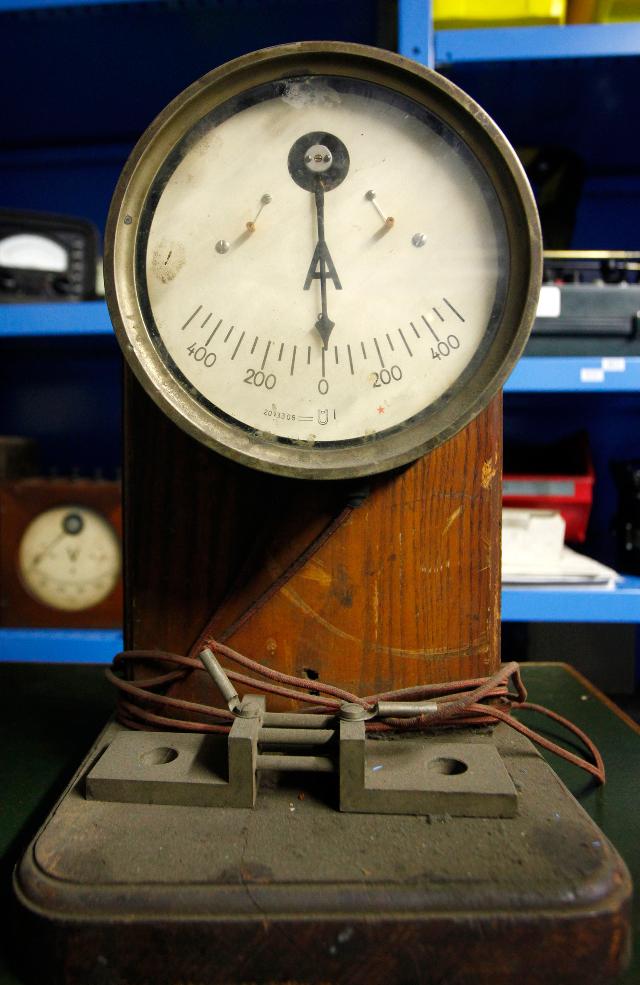
An old voltmeter sits on display at the Siemens AG dynamo factory in Berlin, Germany, on Tuesday, Sept. 28, 2010. Siemens AG, Europe’s largest engineering company, predicted an increase in fiscal fourth-quarter profit to ‘very satisfactory’ levels as orders for industrial equipment rebound. Photographer: Michele Tantussi/Bloomberg
It does not take a great deal of inductive logic to understand the similarities between this period and the initial use of computing in business and manufacturing – slow diffusion, parallel technology use, and attempts to use the new in the old context. So not surprisingly, a strikingly similar slowdown in productivity was noted between the late 1970s and the mid-1990s – causing the Nobel (Riksbank) Prize-winning economist Robert Solow from MIT to remark that “we see the computer age everywhere, except in the productivity statistics.”
I hope that those reading this have already connected the dots to our current EHR “productivity paradox” in health care. Despite the fact that most have adopted, or are adopting these systems, it has been a relatively long diffusion period, and similar to the previous two example, we are living in the period of parallel technology use (digital and paper) in most institutions, even those that are “paperless.” Finally, we are literally so embedded in the use of this medical GPT that we cannot stop to “see” how we are using it in old contexts, but we are.
The good news, however, is substantial. In the two decades following the adoption of both electricity and the computer, significant acceleration of productivity was enjoyed. The secret was in the ability to change the context (in the case of the dynamo, taking pulleys down for example) assisting in a complete overhaul of the business process and environment, and the spawning of the new processes, tools and adjuncts that capitalized on the GPT.
We do not fully grasp what the new context in health care will be, or what exploring this particular frontier will demonstrate, but we know that it will involve the use of GPT-additive digital technologies in entirely new ways, and in new models of both the work flow and delivery of health care, and that productivity will likely improve dramatically as a result. We may also begin to think of the concept of productivity much differently as a result (i.e., what “patient throughput” actually means).
Regardless the future onslaught of “artificial intelligence”, human creativity will be among the last to fall to the inanimate. We have, as Skinner reminds, the unique ability to leverage technology, and not vice versa, to make our brief lives better.
The analog system for the digital age
Source: Bullet Journal: The Analog system for the digital age – The analog system for the digital age
I have been using Ryder´ s system Bullet Journal for several years now. And as the year is coming to an end I thought it might be time to make a little wave around this system to have you start maybe something new in the coming year.
It is really a low tech, high touch type of productivity tool that can easily be set up in a number of ways and is flexible and useful in a great variety.
I use it primarily for note taking on meetings after which I can easily record the various action points that have come my way. But it is just as easy to use it as a journal like the name implies.
My best advice is to have a look around at the gorgeous website and see if you can not get excited about this.
Hope it can help you make more of your dreams and aspirations in the coming year. Good luck!


 Victor Haze