House Duurzaamheid / Archi3o

#intheseries

…a beautiful sustainable Dutch house a day…

Great to see every once in a while a Dutch entry at the ArchDaily website. And if it is a sustainable solution as well, it is hard to resist to place it as a link on the blog.

© Thomas Mayer Architects: Archi3o Location: Cadzand, The Netherlands Lead Architects: Renz Pijnenborgh, Vincent Valentijn, Kim Verhoeven Area: 210.0 m2 Project Year: 2017 Photographs: Thomas Mayer Contractor: Fraanje aannemingsbedrijf, Lewedorp Construction: Keetels Building Physics: Syneff consult Domotica: BeNext Clients: Rakhorst family © Thomas Mayer Text description provided by the architects.

Source: House Duurzaamheid / Archi3o

Google Opens Up Its Tech Training Program to All, Giving You a Reason to Learn New Skills


If you want to work at Google someday but aren’t sure you have the resume for it, the company wants to train you. To help prospective employees bridge skills gaps, the tech giant is partnering with online course provider Coursera to offer access to its IT training program, previously only open to existing Googlers.

Source: Google Opens Up Its Tech Training Program to All, Giving You a Reason to Learn New Skills

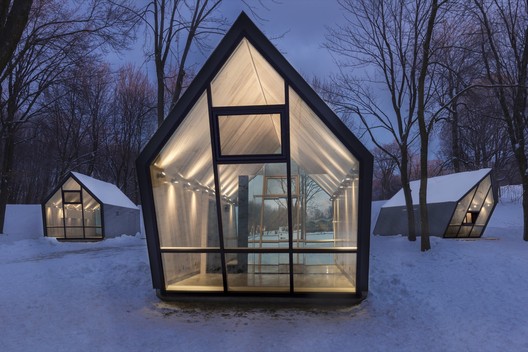
Mount-Royal Kiosks / Atelier Urban Face #afterthestorm

Look beyond first impressions, pt 2

#intheseries

..a beautiful little house a day…

This morning after getting up early I am reading my feedly and I did start again at Architecture at the top of the list.

Sorry for that. But again try to look beyond the first impression. Because when you look at these pictures at first it might not seem so special. But take a closer look.

And suddenly you see that they are not straight. Actually the one on the right seems to be hit by yesterday’s storm. It struck me this morning while I was looking  through the list of options to post about.

And that obscure detail in the picture just suddenly hit me. And I started writing about it.

Because changing habits is a daily challenge.

Work on it, day by day.

Week after week. Month after month.

And somewhere along the line you will find that you became that person you wanted to be.

So I took out my keyboard and started typing, because that is what I wanted to do.

Find your ‘keyboard’ and start ‘typing’…


© Fany Ducharme Architects: Atelier Urban Face Location: Mount Royal Park, 1260 Chemin Remembrance, Montréal, QC H3H 1A2, Canada Team: Sylvie Perrault, Pierre Morency, Geneviève Bouthillier-Martel, Émilie Fortier and Éloize Cotnoir Area: 45.0 m2 Project Year: 2017 Photographs: Fany Ducharme , Sylvain Legault , Normand Rajotte Collaborators: CPF Groupe conseil; Pascal Fortin and Patrick Coutu, Moise Saban Consultants; Moise Saban.

Source: Mount-Royal Kiosks / Atelier Urban Face

Piccolo Haus / SMART ARCHITECTURE

#intheseries

…a modern commercial-living combination house a day…

© Yoon Dong-gyu Architects: SMART ARCHITECTURE Location: Pa-dong, South Korea Lead Architects: Kim Gun-cheol Project Team: Lee seung-eun Area: 199.19 m2 Project Year: 2017 Photographs: Yoon Dong-gyu Construction: Song Byoung-seok Structural Engineer: BORU Mechanical Engineer: HANKUK-kiyeun Electrical Engineer: WOOJIN engineering Client: Oh In-taek © Yoon Dong-gyu Text description provided by the architects.

Source: Piccolo Haus / SMART ARCHITECTURE

Wearables lack clinical impact according to new study.

Recently Cedars-Sinai Medical center published a paper on the impact that wearables have on clinical evidence.

They took 27 studies and found wearables had no significant impact on a number of metrics.

“The study adds to a growing body of research indicating that clinical evidence has struggled to keep pace with the hype surrounding wearables.”  as stated in the article on FierceHealthcare website.

In the digital health startup accelerator I am working as a mentor a lot of new companies base their model on the use of sensors and wearables. It will be interesting to see if and how this impact also exist here in the Netherlands.

‘Wearables and remote monitoring devices do not improve clinical outcomes, but researchers say more data could change that assessment.’

Please don’t kill the blogs

…This morning I said I would look from a different perspective and use an article from another point of time in my feed. So I started at the end of the informationflow and came across the category ‘Thoughtleaders’.

As ever Seth Godin delivers with this blog on improvement suggestions Google could do on their Gmail service…Interesting stuff…


An open note to Google To the gmail team, You’ve built a tool for a billion people. Most of my blog readers use it every day, and so do I. Thanks for creating an effective way for people to connect to the people and ideas they care about.

Source: Please don’t kill the blogs

Getting beyond the first impression

Every morning when I get up early I am looking through my feeds. Looking for interesting articles to read and possible learn from it. It is just my favourite way of starting the day

download

I use Feedly because it presents the various information sources in a magazine-like form. It just looks great. And it has a lot of standard integrations for your other social media.

Actually I think I selected it way back, because it had a instant link with WordPress that I have been using for ages. But that is not really the point I am trying to make 😉

Since feedly uses a number of other sites and incoming streams, I arrange them on topic and the program sets it in alphabetically order. Sounds logical, right?

So then what usually happens I start at the top of the list with #Architecture. Flipping through the pictures of building I more or less select one that catches my eye and I put it up here in the series …a beautiful building a day.

But because architecture is not the only subject in my feed and I have limited time in the morning for this routine I realized I usually don’t get beyond the first category…

So this morning I will start at the end of the list and present an interesting article from the bottom of my feedly magazine and clip something from #Uncategorized, #Technology or #Strategy.

Whichever is first beyond that impression.

Maybe it will become a series in itself.

CloakedHouse / 3r Ernesto Pereira

#intheseries

… a beautiful cloakedhouse a day….

© João Morgado Architects: 3r Ernesto Pereira Location: Marco de Canaveses, Portugal Architect In Charge: Ernesto Pereira Design Team: Tiago Pedrosa Martins, Daniela Leitão Area: 140.0 m2 Project Year: 2017 Photographs: João Morgado Construction And Coordination: 3r Ernesto Pereira Construction Team: Helder Moreira, Joaquim Linhares, José Rocha, Maria José Pereira, Joaquim Pinto, Rui Silva, Bruno Moreira, Marco Silva © João Morgado “(…) a daring delight for the senses, where the unlikely happens and Magic abounds!” – quote from the customer, Alexandra Ferreira. © João Morgado Looking at this project, it is indeed the sensations we experience that leave their mark as we think, walk and live through it. © João Morgado Floor Plan © João Morgado This project was clearly inspired by the place, a piece of land surrounded by chestnut trees, incredibly ripped into the mountain, flanked by a stream that flows down the hillside and a magnificent open view of the other side of the valley perfectly nestled into the natural landscape. © João Morgado It was this bucolic scenario that led to an enterprise that had no intention of imposing itself on the surrounding nature, but rather blending, hiding and transforming with it.

Source: CloakedHouse / 3r Ernesto Pereira

Create Café / Nadine Engelbrecht Architect

#intheseries

…a beautiful café a day…

© Marsel Roothman Photography Architects: Nadine Engelbrecht Architect Location: Menlo Park, Pretoria, 0081, South Africa Architect In Charge: Nadine Engelbrecht Area: 240.0 m2 Project Year: 2015 Photographs: Marsel Roothman Photography Client: Charmaine Freyer of Alpine Attitude Boutique Hotel Main Contractor: EJ Fourie Projects Steel Contractor (Main Structure): Ranco Ondernemings Steel Contractor (Stairs): Kare Sheet Metal Products Roofing Contractor: Trust Sheeting Text description provided by the architects.

Source: Create Café / Nadine Engelbrecht Architect

A Collection of (human) (centered) Design Tooling options…

For years I have been using methods and tooling from the (Service) Design Thinking world. I have written about it earlier on this blog about the theory etc. You can find some earlier attempts here and there.
What strikes me is the abundance of material out there. So I thought an attempt in some collecting tools and methodologies would be nice.

Related stories (in Dutch)

Service Design Thinking Challenges
De vijf eigenschappen van Service Design

As I am trying to get all the various sources of information on this one page I realize with the first two books that I am listing it really isn’t hardcore SDT maybe, but let’s expand the horizon a little then. The books by Osterwalder might not be precisely within the HCD realm, but they do posses a mindset needed to be able to understand innovation, business development and in my case being able to help and support (starting) entrepeneurs.

Tools / Toolboxes

The Field Guide to Human Centered Design
A beautiful designed toolkit from IDEO.org to download in PDF. But you can also buy it in hardcopy from the same site.

DIY (development impact and you) Toolkit
(http://diytoolkit.org/)
A web-based toolkit that you can download in various PDF formats and is based on a variety of questions on what you would like to accomplish. More like Jobs to Be done. For instance: I want to get to know the people I work with…
I want to look ahead…or I want to develop a clear plan….
Very useful, all the tools are related to eachother but also to be used seperately if you want to. Basically it is a menu that you can choose from to compose a complete traject.
I have used the templates myself for various workshops. What I really like about it is that you can print them in different A1 through A4 formats.

Collective Action Toolkit by frog
A global design company whose director I once met at Singularity U. I have not yet worked with this set, but came across it while researching this topic.
The Collective Action Toolbox (CAT) puts design-thinking tools in the hands of local change agents to transform communities.

You can download the CAT at their website when you leave a name and email adress.

Hyper Island Toolbox
An online resource with five different areas of interest. Energizers, Innovation, Self-leadership, Action and Team. You will find most HCD tooling in the innovation category. They also have quite an extensive training program and will contact you when you look around at their site. I believe they have a great old prison type building as their location break out in Sweden. Read their corporate story over their first location here.

Websites

www.ideo.org
What can you say about this site and organization. David Kelly is I think considered to be the ‘inventor’ of the framing around Design Thinking. If you are not getting enthusiastic when you watch these videos on their site I don’t know what will… 😉

www.liveworkstudio.com

www.designthinkersgroup.com
An Amsterdam based group of Design Thinkers in 18 different countries. From their website:
Design Thinking is a mindset to develop and deliver innovative ideas, change and solutions to complicated problems. It is an activity-based process with a strong emphasis on teamwork and co-creation. Our mission is to provide space and time for teams and individuals to be inspired and challenged, to ‘learn-by-doing’ and strengthen their ability for creative problem solving and help organizations build the necessary environment and mind-set.
I have worked with founders Arne and Tim on several occasions to develop what we called a pressure cooker patient journey for chain related healthcare issues. Very pleased with that result in 2014/2015.

The Design Council

An UK based council, established in 1944 to demonstrate the value of industrial design in reviving postwar Britain, the Design Council is now an enterprising charity which works to improve people’s lives through the use of design
They have a lot of resources on their website.

PDF Innovation by Design
PDF Design for the Public Sector

ssir
Stanford Social Innovation Review

These websites all form a good source of SDT related material. Their blogs are easy to follow with a RSS feed so that makes for easy curation of the various information flows.

Books

In no particular order a collection of books and/ or articles I have been reading over the last 5 years that might be of some use to you. The links refer to pages on Amazon.com where you can buy the books should you be interested.
These first two are maybe not so much in the HCD department but they have brought me a lot on the concept of business modelling and looking at various ways to the core of a problem or challenge. In that sense they can help you achieve a better mindset to be able to help entrepeneurs/start-ups in their business development efforts.

bd63a2a9-4c8e-4231-9683-c0f5e5f3131a

Business Model Generation, Alexander Osterwalder and Yves Peigneur.
Value Proposition Design, same authors.

Also very fond of the two books by professor Jeanne Liedtka ‘Designing for Growth” The serie offers a very practical, hands-on way to start working in the design thinking field. You also might want to consider their MOOC offering through the Darden School at the Virginia University. Four modules of 4-5 weeks video led training and website exercises gives you a very broad array of the playing field. Also their 10 step project guide is very useful to combine in your own way.

Hope these tools will help you in some way. Let me know if something is missing.